donate
Helping to Sustain a Way of Life in the Bahamas

The next generation

By Catherine | 16 September 2012 | No Comments
Published in Outreach, Uncategorized

In many schools throughout The Bahamas, teachers and students are starting out this year with a greater knowledge of a beloved marine resource, the queen conch. Thanks to efforts by Bahamian conservation organizations that decided to put special focus on conchs in their summer camps and workshops, the next generation will know more about the biology and ecology of the species, as well as the threats to its survival. Summer camps for kids were held on the islands of New Providence, Andros, Abaco, Grand Bahama, San Salvador, and Eleuthera. On Andros, the Bahamas National Trust (BNT) held a special “Conch-servation” Eco Camp.  The Bahamas Reef Environment Educational Foundation (BREEF) and Friends of the Environment also held camps that included lessons on conch and marine conservation. Several teacher-training opportunities offered by the BNT and BREEF gave the country’s educators a chance to get hands-on experience and add a few conch-related activities to their classroom repertoire. Community Conch was able to attend several of these workshops to present our research and discuss conch conservation with the teachers. At BREEF’s annual marine conservation teacher training workshop we piloted a citizen-science program that will help raise awareness about the illegal and unsustainable harvest of juvenile conch. The camps, workshops, and citizen-science project are all part of an effort to bring conch conservation to the forefront in The Bahamas.  You’ll be hearing more about an organized campaign in the coming months. In the meantime, check out the pictures below and don’t forget check out our Facebook page for conch news updates.


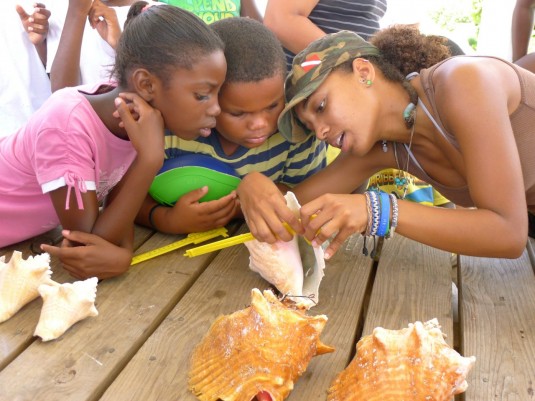
Alannah Vellacott teaches kids how to measure lip thickness of a conch shell at BREEF’s Sea Camp on Eleuthera.

d’Shan Maycock of Friends of the Environment reviews the conch life cycle at their summer camp on Abaco.

Campers present their own conch research at the Bahamas National Trust’s Eco Camp on Andros.

Leaders of the Bahamas National Trust Discovery Club watch a video on conch conservation at their annual workshop.

Bianca Green (BNT), Jackie Chisolm-Lightbourne (College of The Bahamas), and Casuarina McKinney Lambert (BREEF) talk conch anatomy at the BREEF marine conservation teacher training workshop.

Teachers participate in the pilot of a citizen-science project designed to raise awareness about the illegal and unsustainable harvest of juvenile conch.


New video – watch and learn how to estimate the age of a conch!

By Catherine | 12 July 2012 | No Comments
Published in Abaco Expedition 2012, Outreach, Uncategorized, Videos

So, what happens when the weather keeps us from getting out there and counting conch? Usually its data entry, catching up on email, lab work, checking the weather forecast, more data entry, checking the forecast again…mostly we’re behind the computer, but sometimes we get a little creative. Chris and Dunte arrived In Sandy Point just in time for the effects of a tropical storm, so they had lots of time to hone their acting skills and shoot an outreach video about one of the most interesting things they learned in their volunteer training…how to estimate the age of a conch. They also wanted to make sure they got out an important message. Take a look and share with people who might be interested!

Meet Brandon, Tow Master

By Catherine | 5 July 2012 | No Comments
Published in Abaco Expedition 2012, Uncategorized

Brandon Jennings recently graduated from C.V. Bethel High School, where he participated in their highly regarded marine science magnet program. He spent the last year as a Bahamas Environment Steward Scholar (BESS Scholar) attending the Island School and completing an internship with the Bahamas National Trust. For a 17 year old, Brandon has a lot of field experience and it shows! On late notice, he joined our project in Abaco and played a critical role in getting surveys done on the fishing grounds of More’s Island. Despite the remote location and sometimes challenging weather conditions, he averaged 11 tows per day! Definitely tow master standards. Brandon says he’s always wanted to study queen conch because he learned when he was younger that their populations have been decreasing. He was ready when the opportunity to help us came up and made a huge contribution to our effort. Thanks Brandon!

Brandon jumps in for tow #12.

Connecting with the community

By Catherine | 3 July 2012 | No Comments
Published in Abaco Expedition 2012, Outreach, Uncategorized

When Community Conch visits a a location to conduct surveys, we also set a high priority on meeting with the people who are in touch with the resource on a daily basis. These folks might be fishers, fisheries officers, restaurant owners, other scientists, and local conservationists. By connecting with them, we get a better idea of things like fishing pressure, market trends, conch population trends, important fishing areas, and of course, all of the concerns and opinions that these stakeholders are willing to share. Our work in the Bight of Abaco was centered around two settlements, Sandy Point and More’s Island, which are both are very reliant on their lobster and conch fisheries. A high percentage of the men in these communities are fishermen, and so it was our goal to hear directly from them. We also wanted to make sure they knew what we were up to on their fishing grounds! Here’s a picture of the public meeting in Sandy Point, and a few that illustrate the fishing lifestyle of the two settlements.

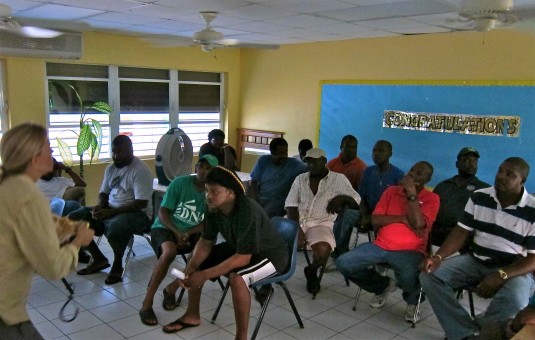
Catherine talking with fishermen in Sandy Point about estimating the age of a conch and reproductive maturity.

Fishing skiffs in Sandy Point. photo by C. Booker

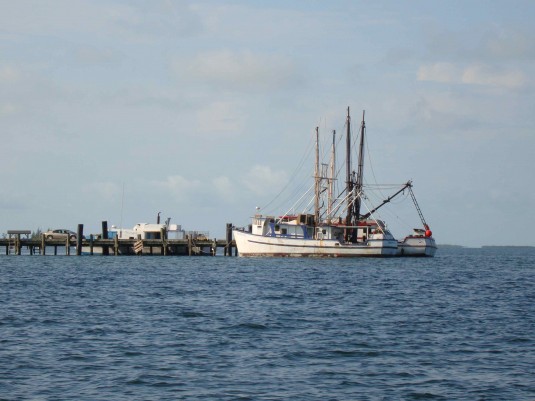
Larger fishing boats in More's Island. photo by M. Davis

A conch shell pile or midden on the shoreline of More's Island. photo by M. Davis

A speedy conch…

By Catherine | 27 June 2012 | No Comments
Published in Abaco Expedition 2012, Uncategorized, Videos

…can only move this fast! Even though a large part of the conch’s body is one big muscle, they don’t exactly flee from predators. When they’re small they bury themselves in the sand to avoid being eaten by animals like rays and lobsters. When they grow bigger, their strategy is to hide inside their thick shell. Unfortunately for the conch, that big shell may make them more visible to their #1 predator, HUMANS. And where there’s one conch, particularly during the summer mating season, there are likely many more in the area because conchs mate in large aggregations. Hundreds or even thousands of individuals might be found in an aggregation, and all they can do when they see YOU coming is retreat into their shell. And well, we’ve gotten pretty good at getting them out of the shell. Check out this “Great Conch Race”on conchsaladtv.com


Training camp…can you spot the conch?!

By Catherine | 25 June 2012 | No Comments
Published in Abaco Expedition 2012, Uncategorized

Welcome Dunte Rolle and Christopher May! As of today, we have two new volunteers here in Sandy Point. Being new to the conch towing business, we put these two recent high school graduates through our “rigorous” training camp as soon as they arrived. Not only do you have to be able to spot conch like these within a transect while getting dragged through the water…

Can you spot the conch?

…you’ve got to learn how to categorize conchs as a juvenile, subadult  (roller), or adult, and identify mating behavior and spot egg masses. We also measure the size and lip thickness of quite a few conch shells, so you’ve got to learn how to use the calipers. During our afternoon boot camp, Dr. Stoner showed the guys the ropes and they are ready to go this week!

Dr. Stoner explains the stages of the conch life cycle after collecting a few examples.

Training...three to a tow.

Chris and Dunte measure the thickness of a large conch's flared lip.

Conchin’ in Sandy Point

By Catherine | 20 June 2012 | 1 Comment
Published in Abaco Expedition 2012, Uncategorized

Sandy Point is the furthest settlement on the southwestern tip of Great Abaco Island. This quaint fishing community has depended on the Bight of Abaco fishing grounds for generations for both lobster and conch. The conching in this area is legendary and supports year round harvest for both local consumption and export. We’re here to conduct the first stock assessment of conch populations near Sandy Point and Moore’s Island, and to follow up on last year’s study of the relationship between the thickness of the flared lip of the conch shell (an indicator of age) and reproductive maturity.

But before we get in to too many details…we are really glad we’re going to be here in Sandy Point and have already met some of the nicest people in The Bahamas! We’re so grateful for the support we’ve received from the Bahamas Marine Mammal Research Organization, who are putting half of us up in their field station;  the Abaco office of the Bahamas National Trust for logistical support and planning; Paul Pinder, a true gentleman, bonefishing guide extraordinaire, and friend of the conch, who is making sure we have a working boat every day; and Jeremy Saunders and Administrator Pinder, for their valuable insight into the conch fishery.

Here are a few pictures from the field…

Our newest volunteer, Brandon Jennings of Nassau getting in his first tows with Paul Pinder at the helm (and Marc!).

The team (except for Marc!) with Mr. Saunders of the Department of Marine Resources, and Mr. Pinder, South Abaco Island Administrator and former fisherman.

A "roller" in the beautiful seagrass habitat of the Bight of Abaco.

Conch even grow on trees in Sandy Point!

Abaco, here we come!

By Catherine | 14 June 2012 | No Comments
Published in Abaco Expedition 2012, Uncategorized

Map of general survey area in the Bight of Abaco.

In a few days we’ll start our 2012 surveys in the Bight of Abaco. We’ll be arriving at Sandy Point by boat and plane for 2 weeks of conch counting. We’ve got some brand new volunteers this year, all aspiring marine biologists right out of high school. One of our best volunteers ever will be joining us all the way from Oregon. And, we’ve got conch guru, Allan Stoner in the field this year! We’ll be adding new posts about the Abaco Expedition as often as we can, so stay tuned.

Serve it now, serve it later

By Catherine | 16 April 2012 | No Comments
Published in Outreach, Uncategorized

Bahamians have lived off the sea for a long time, so they take their fish (and fishing) very seriously. The queen conch, Strombus gigas, is one of those targeted species, and you can find it on just about any menu in many different recipes. Cracked conch, conch chowder, conch salad, conch burger, scorched conch, conch and grits, you name it! People of all nationalities and walks of life love it. In The Bahamas its a cultural icon and dietary mainstay. So, its hard to imagine a Bahamian restaurant that doesn’t serve conch, but soon they might not have a choice. Conch is getting harder and harder to find. Overfishing is taking its toll.

Big D is the owner of two restaurants on the island of Exuma, Big D’s Conch Spot and Big D’s Sand Bar and Grill. His menu is full of fresh seafood choices and conch dishes. His businesses are among the most successful on the island, but Big D has a problem. He’s worried about the conch. He’s concerned that when we wants to buy fresh conch, fishermen have fewer mature conch, and more immature conch to sell to him. He knows this is not a good sign, and as a fisherman himself, he knows what it means. Conch are getting scarce and something needs to be done. He’s willing to do it. Big D only buys mature conch (those that have had a chance to reproduce) and by doing so, he’s using his influence in the supply chain to make a change. He’s also committed to education of any and everyone who will listen including customers, fishermen, and fellow restaurant owners. Its not a problem he can solve by himself, but he knows he must make a choice if he wants to make sure he can serve conch now and in the future. Community Conch is looking forward to assisting Big D in his efforts. He is a leader in his country and in the Caribbean.

Our director Martha Davis and Big D with a few mature conch at Big D's Sand Bar and Grill.

Meanwhile, elsewhere in the world, chefs and restaurant managers who are not as closely connected to the source of their seafood products are also making a choice. Their mission: Only buy and serve sustainably caught seafood, and educate customers about the benefits of consuming only sustainably caught seafood. Whole industries are following suit, with certifications that encourage responsible harvest of marine resources including the lobster fishery in The Bahamas. For more information about the sustainable seafood movement check out these links:
Marine Stewardship Council

Good Catch

Seafood Choices Alliance

Monterey Bay Aquarium

And remember, next time you order seafood, keep sustainability in mind and vote with your dollar!

Coming soon…a new cohort of conch counters!

By Catherine | 21 March 2012 | No Comments
Published in Outreach, Uncategorized

After a great visit in the Exuma Cays Land and Sea Park last summer, and with conch on the priority list, the Island School invited us over to Cape Eleuthera to help them get a queen conch monitoring program started! We’re super excited to support this effort, especially since we’ve benefited so much from the great training their students get through the Bahamas Environmental Steward Scholarship (BESS) program offered every semester at the school. Some of our best volunteers have been BESS students (wink Ted, Alannah, and Jaz).

The student research group will soon be heading out into the shallow waters in the backyard of their campus to survey queen conch. First, their fearless research instructors, Steve and Kristal, wanted to make sure the data they will be collecting is comparable to the data Community Conch collects in other areas of The Bahamas. Second, they were glad to get a little towing wisdom…it goes a long way!

The new Island School conch cohort

So into the field we went…The students had a great time floating along in the chilly water learning what a queen conch, milk conch, and king helmet conch look like, how to quickly determine if a conch is alive or just an empty shell, and how to identify a juvenile, sub-adult, and adult. Steve and Kristal also learned the finer points of getting in a good transect tow, and how to measure the lip thickness of a conch shell.

Looking for the queen

Kristal measures the lip thickness of an adult conch

Steve and Kristal collect their first conch for measurement.

The surveys the Island School research group will complete are important, not only for educational purposes, but in a real life context. The area they will cover is an important local fishing ground that supplies the communities of south Eleuthera. What would they do without a steady supply of conch?! Geographically, it’s also a very interesting area because of the orientation to Exuma Sound and possible connectivity to other conch populations in this system.

So, good luck Steve, Kristal and the conch research team! You’re on your way to making a difference!

Page: 123

DID YOU KNOW?

adult conch

A Queen Conch flares its shell lip at 3-4 years, but it may take 6 years to reach sexual maturity.

MORE FACTS >>